Author name: Dr.JenMo

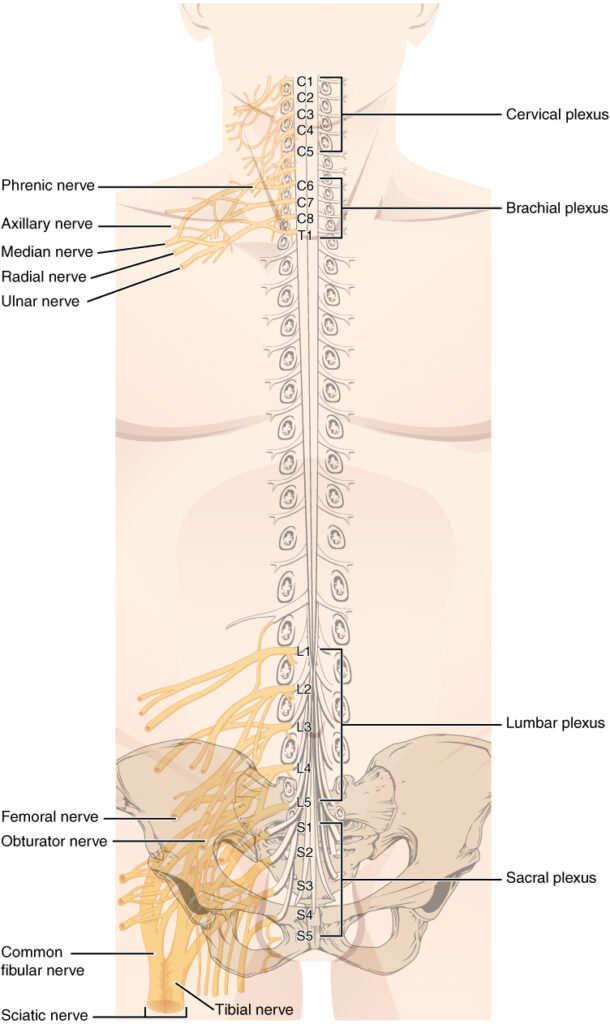
1321 spinal nerve plexuses

Plexuses Related to the Autonomic Nervous System and Their TCM Correlates

Understanding the Nerve Plexus: The Body’s Communication Hubs In Western anatomy, a nerve plexus is a complex, branching network of intersecting nerves. Think of it as a “junction box” or a high-speed data hub where multiple nerve fibers from different spinal levels come together, reorganize, and then travel out to specific organs and muscles. These Read More

Primitive Reflexes and Their Role in Nervous System Development

© 2025 J. Moffitt. Registered U.S. Copyright Office. Polyvagal Acupuncture®. Primitive reflexes (PRs) are foundational components of the human nervous system, and serve as essential building blocks for complex motor and cognitive functions. These automatic, involuntary movements are present at birth and were thought to integrate as the child matures, usually by the age of

brain human normal inferior view with labels en 2.svg

Cranial Nerves and Their Influence on Development

The cranial nerves are the primary neural pathways that emerge directly from the brain, playing essential roles in sensory perception, motor control, and autonomic regulation. There are twelve pairs of cranial nerves, each responsible for specific functions, ranging from the senses of smell, vision, and hearing to the control of muscles in the face, eyes,

Timeline of Somatic Therapy and Bodywork Styles

Psychotherapy has undergone a fascinating evolution, expanding from its early roots in talk therapy to increasingly incorporate body-centered and movement-based approaches. In the early 1900s, pioneers like Frederick Matthias Alexander began exploring the connection between the body and mind, leading to the development of somatic therapies. Over time, various body-oriented techniques emerged, such as Feldenkrais

In the beginning…

Was the Chong… It sounds biblical, doesn’t it?  Let me preface this introduction to our primary meridians by expressing my deep gratitude to Dr. Michael Greenwood and his son for these amazing illustrations  FIG. 1 and FIG. 2.  . The Chong Mai and Dai Mai. Forward view with dotted lines indicating posterior trajectories. Graphic by Richard

error: Content is protected !!
Scroll to Top