
First published on Down the Polyvagal Rabbit Hole, March 2024
© 2025 J. Moffitt. Registered U.S. Copyright Office. Polyvagal Acupuncture®.
Head Righting Reflexes are a set of midbrain-driven postural responses that emerge around 2–3 months of age and remain active throughout life, albeit in a more refined, voluntary form. These reflexes govern the body’s ability to maintain head and eye alignment with the horizon—a prerequisite for balance, coordinated movement, and autonomic regulation.
They are not primitive reflexes in the traditional sense, but rather transitional postural reflexes that replace primitive patterns like TLR, ATNR, and STNR. Their presence indicates maturation of vestibular–ocular–spinal coordination and the emergence of cortical control over postural tone.
In the last two decades—especially since COVID—we’ve seen a dramatic rise in retained Head Righting reflexes in teens and young adults. Most present with fascial rigidity from T3 upward, compromising cervical rotation, vagal tone, and in severe cases, carotid and sympathetic ganglia function.
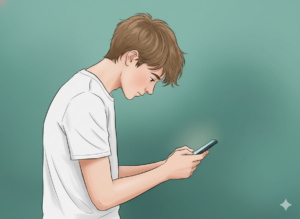
This isn’t just postural collapse; it reflects a widespread failure to develop midbrain reflexes essential for spatial orientation and autonomic safety. Nearly every patient I’ve seen now demonstrates this pattern—driven by chronic ‘phone-neck’ flexion that creates a massive failure of the Head Righting system. What used to be a transitional postural bridge is now a chronic state of underdeveloped tone and carotid-compressing spasticity. This puts direct mechanical pressure on C4 and the internal carotid artery, serving as a primary driver for the systemic oxidative stress and neurovascular depletion seen in modern clinical populations.
If the Head Righting Reflex remains underdeveloped or becomes impaired in adulthood, it can lead to various challenges with balance, coordination, and spatial orientation. Adults with underdeveloped Head Righting may struggle with maintaining an upright posture, especially when moving or changing positions quickly. This can result in dizziness, vertigo, or a sense of disorientation. The persistent compensatory spasticity required to stabilize the head can also interfere with fine motor control, leading to eye strain, neck discomfort, and mechanical pressure on the internal carotid artery. Additionally, an underdeveloped Head Righting Reflex may contribute to difficulties with balance and coordination, making it harder to perform activities that require precise body control, such as yoga or dance.”
Types of Head Righting Reflexes
- Optical Righting (visual) – mediated by visual cues
- Labyrinthine Righting (vestibular) – mediated by inner ear balance organs
- Neck Righting (proprioceptive) – mediated by cervical spinal input
Each variant adjusts the body in relation to the head, or the head in relation to space, depending on the stimulus.
Neurological and Autonomic Profile
Head righting reflexes integrate information from:
- Vestibular apparatus (CN VIII)
- Visual cortex (CN II pathways)
- Cervical proprioceptors
- Midbrain and superior colliculus
- Medial and lateral vestibulospinal tracts
They coordinate a shift from primitive reflex tone to dynamic, gravity-informed postural control. Their activation supports:
- Midline orientation
- Postural equilibrium
- Vertical grounding through the feet and spine
- Development of smooth head–eye–neck coordination
Autonomically, head righting fosters ventral vagal tone via improved spatial awareness, breath regulation, and body–environment orientation.
Clinical Relevance of Impaired Righting Reflexes
Failure to fully activate or rely on head righting reflexes may result from retained primitive reflexes (e.g., TLR, ATNR, Moro) or early vestibular trauma. In such cases, the body reverts to:
- Head–body en bloc movement
- Lack of dissociation between head and trunk
- Over-reliance on visual or proprioceptive strategies without true vestibular integration
- Reactivation of ATNR/STNR loops (head movement triggering limb tension or postural slump).
- Systemic oxidative stress and neurovascular depletion due to chronic mechanical compression of the internal carotid.
Adults may present with:
- Chronic dizziness or visual disorientation
- Overactive neck musculature, esp. SCM, scalenes, suboccipitals
- Thoracolumbar hinge point or sacral fixation
- Compensatory eye tracking or head tilting
- Inability to find vertical midline during seated meditation, tai chi, or yoga
Somatic and Energetic Architecture
Head righting reflexes express through fine-tuned cervical–trunk–pelvis coordination. When this system fails or is underdeveloped, the entire axial skeleton lacks internal reference, and postural control remains gross, effortful, or compensatory.
Muscles Involved:
- Sternocleidomastoid
- Suboccipitals
- Upper trapezius
- Deep cervical flexors
- Erector spinae and QL
- Pelvic and foot stabilizers (via vestibulospinal downstream)
Cranial and Autonomic Structures:
- CN VIII (vestibular)
- CN XI (head–neck stabilization)
- Midbrain collicular pathways
- Cervical sympathetic ganglia
- Vagal afferents through diaphragm
- Internal Carotid Artery & C4 Nerve Root (Primary mechanical compression points in underdeveloped righting patterns causing neurovascular depletion)
Myofascial Lines:
- Deep Front Line (DFL)
- Spiral Line
- Lateral Line, especially through inner ear → foot arch mapping
Acupuncture Zones and Meridians:
- STOMACH CHANNEL – THIS IS TOO COMPLEX TO DETAIL HERE
- Ren Mai, GB Channel, Spiral Line (CHONG)
Energetic Interpretation
In TCM terms, head righting reflexes reflect the first emergence of upright Yang through Du and GB channels. They represent Heaven–Man–Earth orientation: head aligned with sky, feet aligned with ground.
When head righting fails:
- The Shen cannot anchor in the body
- The Yi and Hun remain spatially confused
- Chong flow collapses downward or flares upward
- Wei Qi disperses erratically
This can mimic symptoms of Liver Yang rising, Kidney Yang deficiency, or Heart–Kidney disharmony—but the source is often structural rather than constitutional.
Summary Table
| Feature | Head Righting Reflexes |
| Appears | ~2–3 months |
| Integration | Persist as lifelong postural strategies |
| Primary Movement | Head and trunk realignment in space |
| Neuroanatomy | CN VIII, CN XI, visual cortex, vestibulospinal tracts, internal Carotid / C4 |
| ANS Effect | Promotes ventral vagal tone via orientation and balance |
| Fascial Pattern | Midline postural adaptation; cervical–pelvic link |
| TCM Systems | GB, UB, Du, Chong |
| Clinical Red Flags | Dizziness, poor vertical orientation, cervical rigidity, effortful postural control |
References
- Deadman, P. , Al-Khafaji, M. (2007). A Manual of Acupuncture (2nd ed.). Journal of Chinese Medicine Publications.
- Fratkin, J. (n.d.). More Divergent Channel Treatment (Part 4). Dr. Jake Fratkin. Retrieved March 13, 2025, from https://drjakefratkin.com/3-level-najom/part-4-more-divergent-channel-treatment/
- Keleman, Stanley. Emotional Anatomy: The Structure of Experience. Berkeley: Center Press, 1985.
- Levine, P. (1997). Waking the Tiger: Healing Trauma. North Atlantic Books.
- Levine, P. A. (2010). In an Unspoken Voice: How the Body Releases Trauma and Restores Goodness. North Atlantic Books.
- Low, R. H. (1984). The Secondary Vessels of Acupuncture: A Detailed Account of Their Energies, Meridians, and Control Points. HarperCollins.
- Maciocia, G. (2005). The Foundations of Chinese Medicine: A Comprehensive Text for Acupuncturists and Herbalists (2nd ed.). Churchill Livingstone.
- Masta ova, I. (2005). Integrating Primitive Reflexes for Neurodevelopment. Neurotherapeutics Press.
- Myers, T. W. (2020). Anatomy Trains: Myofascial Meridians for Manual and Movement Therapists. Churchill Livingstone.
- Porges, S. W. (2011). The Polyvagal Theory: Neurophysiological Foundations of Emotions, Attachment, Communication, and Self-Regulation. Norton & Company.
- Pryor, K. (2020). Ten Fingers, Ten Toes, Twenty Things Everyone Needs to Know: Neuroplasticity for Children. Karen Pryor Publications.
- Rosen, J. (2020). Unshakable: Healing the Roots of Trauma. Mindful Living Press.
- R. Louis Schultz and Rosemary Feitis, The Endless Web: Fascial Anatomy and Physical Reality (Berkeley: North Atlantic Books, 1996).
- Soulié de Morant, G. (1939). L’Acupuncture Chinoise. Éditions Payot.
- Stecco, C. (2015). Functional Atlas of the Human Fascial System. Elsevier Health Sciences.
