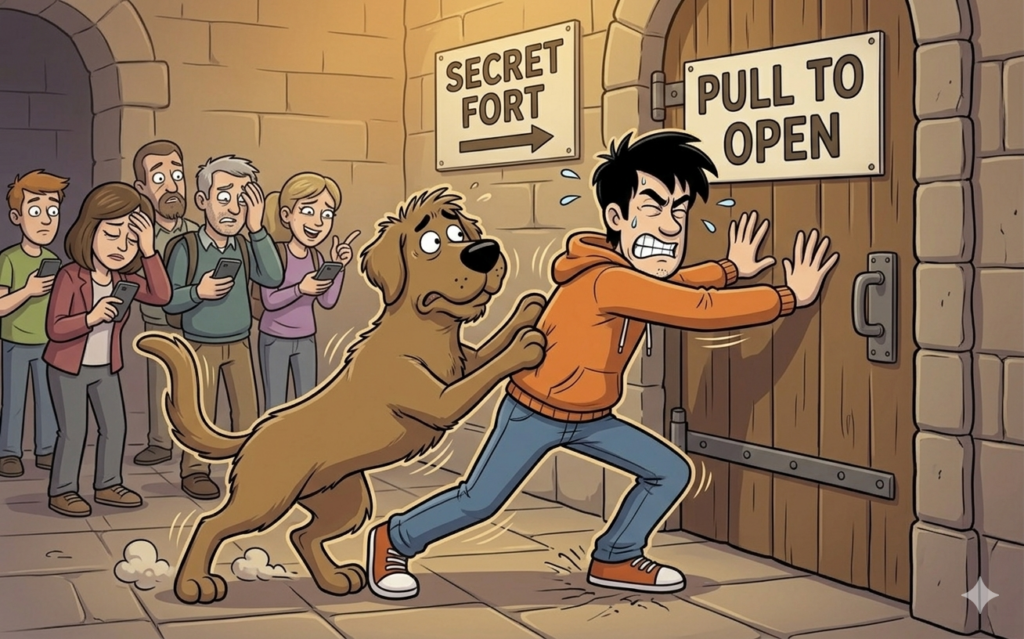
Resistance as a Root Defensive State
Resistance is not a personality quirk or a lack of motivation. It is a fundamental root response to perceived internal or external pressure — a barrier to change, influence, or vulnerability that operates whether you are aware of it or not.
It is not a single emotion. It is a meta-state: a defensive stance that blocks emotional and physical movement at the source. It emerges when the nervous system has decided — often long before conscious thought catches up — that change is more dangerous than staying stuck.
It shows up in three ways:
- Internal resistance — emotional or cognitive rigidity, avoidance of self-inquiry, the inability to sit with what is actually happening inside
- External resistance — defiance, refusal, opposition, passive-aggressiveness
- Physiological resistance — chronic muscle tension, breath-holding, autonomic bracing that the body has been running for so long it no longer registers as unusual
The most important thing to understand about resistance is this: the nervous system is not being difficult. It is doing exactly what it learned to do. When the system perceives change as threatening rather than adaptive, resistance is the logical outcome. Until that threat assessment changes — at the level of the body, not just the mind — resistance will persist regardless of insight, intention, or willpower.
Autonomic Patterning
Resistance does not look the same in every nervous system. Its character depends on which branch of the autonomic system is dominant.
Dorsal Vagal (Freeze-based Resistance): Deep shutdown, refusal to engage, passivity. The system locks into immobility. This is resistance as absence — nothing moves, nothing processes, nothing changes.
Sympathetic (Fight-based Resistance): Defensiveness, argumentation, oppositional behavior. Active bracing against external pressure. This resistance is loud and visible.
Mixed State (Fight/Freeze Blend): Chronic passive-aggression, rigidity without emotional access. Arguably the most entrenched pattern — it has the shutdown of freeze with just enough sympathetic activation to maintain the holding. People here often appear functional while being completely inaccessible to change.
When autonomic flexibility is low, the body defaults to resistance rather than allowing adaptation. This is why people resist even changes they consciously want — the nervous system has encoded newness itself as threat. Insight alone cannot override this. The body has to be convinced.
Brain Regions and Neurochemistry
Brain Region | Function in Resistance | How It Manifests |
Amygdala | Threat detection and perceived violations | Over-activation → rigid self-protection, hyper-reactivity, anticipatory shutdown |
Insular Cortex (ICC) | Interoception and body-awareness | Disconnection from internal cues reinforces somatic rigidity |
Anterior Cingulate Cortex (ACC) | Emotional processing and impulse modulation | Suppressed function → low emotional flexibility, resistance to new perspectives |
Prefrontal Cortex (PFC) | Rational override and cognitive reappraisal | Low activation → rigid black-and-white thinking, inability to adapt |
Dorsal Motor Nucleus of the Vagus (DMNV) | Subconscious freeze and bracing responses | Chronic low vagal tone → microvascular contraction, fascial freeze |
Cerebellum & Basal Ganglia | Motor rigidity and postural tension | Resistance locks into Run/Du Mai paraspinal fascial stiffness |
Resistance is limbic-dominant but lacks full amygdala expression — it freezes instead of fighting. Poor insular integration means the person is disconnected from the body signals that would otherwise make the holding visible. ACC and PFC suppression together eliminate cognitive reappraisal as an option, which is why telling someone in resistance to “just think differently” is largely useless.
The DMNV piece is particularly significant: microvascular contraction creates deep lung capillary vasoconstriction that physically anchors resistance in the breath cycle. The breath is simultaneously the most available intervention and the most resisted one. When someone cannot take a full breath — or braces against the invitation to breathe — you are looking directly at the physiology of resistance.
Neurochemical Signatures:
- ↑ Cortisol and Noradrenaline — hypervigilant resistance, the system scanning for threat continuously
- ↓ Dopamine — avoidance-based resistance, nothing feels worth moving toward
- ↓ Oxytocin — social and relational withdrawal, safety with others is offline
Somatic and Bioenergetic Expression
Resistance lives in the body before it lives anywhere else. Its primary somatic markers are consistent across structures, though the emphasis shifts depending on character type:
- Chronic breath-holding — often overlapping with retained FPR and Moro activation
- Run/Du Mai fascial rigidity along the spine — the body literally stiffening against forward movement
- Lung sinew channel constriction — chest tension, restricted expansion, the breath that never quite reaches the bottom
- Hypertonic jaw, neck, and upper thoracic restriction — bracing at the gateways of expression and perception
- Pelvic-floor bracing — the loss of grounding that makes the whole system feel unsafe to soften
Associated Primitive Reflexes:
Fear Paralysis Reflex (FPR) — the deepest freeze layer. Rooted in pre-birth threat response, it produces hesitation, shutdown, and the inability to initiate movement or action even when consciously desired. Retained FPR is a major driver of resistance that appears inexplicable to the person experiencing it.
Moro Reflex — the startle-to-overwhelm reflex. When retained, it amplifies resistance to unexpected change, new information, or anything that arrives faster than the system can process. The world stays permanently too much.
Tonic Labyrinthine Reflex (TLR) — governs postural readiness and the relationship between the head, spine, and gravity. Influences whether resistance expresses as rigid bracing or collapsed withdrawal.
Character Defense Structures
Each bioenergetic structure processes resistance differently. The quality, location, and expression of the holding shifts depending on the developmental wound underneath it.
Character Defense | How Resistance Manifests | Somatic Holding Pattern |
Schizoid | Intellectualizes, detaches from feeling — the body becomes irrelevant | Withdrawn posture, upper-back rigidity, the sense of not quite being here |
Oral | Resists through indecision and reassurance-seeking — compliance that never quite commits | Shallow breathing, chest constriction, the breath that stays in the upper chest |
Masochistic | Suppresses self-expression, swallows the resistance whole | Deep muscular rigidity, chronic breath-holding, the body as container rather than conduit |
Rigid | Perfectionism as resistance — control maintained through impossible standards | Tense jaw, upright stiffness, diaphragm suppression that keeps emotion managed |
Psychopathic | Dominance and control as the bypass of vulnerability — resistance enforced outward | Locked thoracic spine, paraspinal contraction, the chest that leads |
Schizoid and Masochistic structures lean toward freeze/dorsal vagal resistance — the holding is deep, quiet, and often invisible until the system starts to soften. Oral and Rigid structures lean toward fight-based control resistance — more visible, more defended, often more articulate about why change is not currently possible. The Psychopathic structure tends to bypass resistance by enforcing dominance, making vulnerability the threat rather than the destination.
Placement in the Emotional Hierarchy
Resistance belongs at the root of the dorsal vagal freeze hierarchy, preceding dread, grief, and powerlessness. It is pre-verbal and autonomic. It does not negotiate. It does not respond to reason. It simply braces.
This placement matters clinically: until resistance is engaged somatically, deeper emotional processing remains largely inaccessible. You cannot grieve through a body that is still braced against the possibility of feeling. You cannot integrate what the system will not let arrive.
Freeze-Based Hierarchy (Dorsal Vagal — Root Level):
- Severe Shame
- Negative Grandiosity
- Deep Fear/Panic
- Dread
- Resistance
- Grief
Run/Du Mai work, FPR integration, and Bladder Channel release are the primary access points for unlocking resistance at this depth.
TCM and Fascia Integration
Resistance organizes along specific sinew channels with distinct patterns depending on the dominant autonomic state.
Primary Sinew Channels:
- Lung Sinew Channel — restricts breath and chest expansion; the physical substrate of the held breath
- Bladder Sinew Channel (Run/Du Mai) — spinal rigidity and freeze bracing along the posterior chain
- Liver/Gallbladder Sinew Channels — lock in fight-based resistance, lateral and anterior holding patterns
Fascial Holding Patterns:
- Freeze-based resistance: constriction in the posterior fascial chain — spine, diaphragm, paraspinals
- Fight-based resistance: restrictions in the anterior fascial chain — chest, throat, diaphragm
Chakra Correlates:
Chakra | Energetic Imbalance in Resistance |
Root (Muladhara) | Resistance to being here at all — grounding into the body, engaging with life |
Sacral (Svadhisthana) | Emotional over-attunement without boundaries, the body that feels everything except itself |
Solar Plexus (Manipura) | Chronic self-invalidation, perfectionism as control, the will turned against the self |
Heart (Anahata) | Blocking vulnerability, rigid relational dynamics, love as transaction |
Throat (Vishuddha) | Fear of authentic expression — either silence or performance |
Third Eye (Ajna) | Hyper-vigilant perception — seeing threats and flaws everywhere |
Crown (Sahasrara) | Spiritual bypassing as a defense against actual embodiment |
Resistance locks primarily through the root, solar plexus, and throat. Releasing it requires something the system has decided is not safe: breath, body awareness, and the willingness to soften into presence.
Regulation Strategies
Shifting resistance requires moving the nervous system from rigidity toward adaptability — and this cannot be done cognitively. The body has to lead.
For Fight-based Resistance (Sympathetic Overdrive):
- Slow exhalation breathwork — extending the exhale directly engages vagal brake function and begins to soften the bracing
- Micro-movements and fascial unwinding — disrupting the rigid patterning through movement too small to trigger threat response
- Liver/Gallbladder channel activation for release of lateral and anterior holding
For Freeze-based Resistance (Dorsal Vagal Shutdown):
- Grounding — pelvic activation, weight-shifting, felt sense of contact with the floor — before anything else. You cannot work with a system that is not here
- Interoceptive awareness exercises to slowly rebuild the connection between perception and body signal
- Lung sinew channel release through breathwork and acupuncture to begin unfreezing the breath cycle
For Adaptive Resistance (Growth and Expansion):
- Ren/Du Mai activations to restore spinal fluidity and midline coherence
- Somatic self-inquiry — building the capacity to stay with sensation rather than interpret it away
- Midline-focused movement practices — Qi Gong, Tai Chi, spinal undulation — to develop nervous system adaptability over time
Self-Inquiry Questions
For Those in Resistance:
- Where in my body do I feel the most locked up, tense, or heavy?
- What am I afraid would happen if I allowed movement or change in this area?
- What emotions might be underneath my resistance?
- Do I feel safer in withdrawal, perfectionism, control, or defiance — and what does that safety cost me?
- If I soften this resistance even slightly, what new sensations arise?
- Can I recall a time when this resistance protected me? Is it still protecting me from the same thing?
- What small, controlled action could shift this state without overwhelming the system?
For People-Pleasers:
- Where in my body do I feel the pull to meet others’ expectations?
- What part of me believes I need to earn love, attention, or safety?
- What happens if I attend to my own needs before anyone else’s — just for a moment?
- How do I shape-shift to avoid rejection, and what does it cost me?
- What would it feel like to disappoint someone and stay present with myself anyway?
- What does validation mean to me, and can I give it to myself?
- What happens when I allow someone else to be uncomfortable without fixing it?
For “Cannot Be Pleased” Patterns:
- Do I frequently find fault — in others, in myself, in life?
- What would actually happen if I softened my standards?
- Who taught me that perfection equals safety?
- When I reject something, am I rejecting the thing — or rejecting vulnerability?
- What does it feel like in my body to allow something to be good enough?
- Where do I brace when I anticipate disappointment?
- What is beneath the frustration — grief, fear, or longing?
- What would it feel like to receive without immediately finding the flaw?
For all structures: “What would it feel like if I stopped running from myself?”
Summary
Resistance is not a fixed trait. It is a neuro-somatic state — one that is dynamic, layered, and responsive to the right interventions delivered in the right order. It sits at the root of the freeze hierarchy, upstream of most emotional processing, and it is anchored in the body through breath restriction, fascial bracing, and autonomic rigidity that predates conscious memory.
You cannot think your way out of it. You cannot insight your way out of it. The system has to be met where it actually lives — in the breath, the fascia, the reflexes, the places in the body that have been bracing since long before the person in front of you had words for any of it.
That is where the work begins.