
The Sinew Channels: A Roadmap for Autonomic Restoration

© 2026 J. Moffitt. Registered U.S. Copyright Office. Polyvagal Acupuncture®.
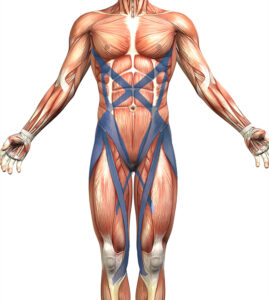
asis switches, lateral line, spiral line, ipsylateral lineIn clinical practice, especially in soft tissue orthopedics and in treating conditions like Long COVID, CPTSD, Adrenal Collapse, or Autonomic Dysregulation, we often see patients stuck in a state of partial Primitive Reflex (PR) demonstration, a hallmark of deep autonomic imbalance. While many reflexes can appear, the Sinew Channels (Jing Jin) are the objective roadmap to restoring balance, providing a clear path for both symptom relief and long-term regulation.

From Orthopedic Success to Neurological Restoration

Currently, the prevailing models in physical therapy and TCM focus on symptom relief. However, by applying developmental movement patterns to the Sinew Channels, we can address the underlying autonomic dysregulation. This approach has the potential to produce dramatic results: for example, conditions like frozen shoulder—which often require months of conventional therapy—can sometimes be resolved within a few sessions, particularly when the emotional triggers at the time of onset are included.  

The Blueprint of Unraveling

Spasticity is our primary benchmark for assessing the depth of disharmony within the Sinew Channels. Objective markers, such as changes in tissue tone and skin color, reflect the parasympathetic state and are observable to both the practitioner and the patient from the very first visit.

Recent fascial research, notably by Carla Stecco and colleagues, shows that autonomic dysregulation alters the hyaluronic acid matrix in fascia, creating a glue-like substance that restricts glide between layers and contributes directly to spasticity and tissue restriction. Manual interventions such as palpation, tissue mobilization, and guided movement are essential for resolving these adhesions and restoring function.

For TCM to be truly effective in this context, practitioners must move beyond an exclusive focus on point-based protocols and reconnect with the broader canvas of the sinew channels through touch and direct observation. Needles alone cannot dissolve these fascial adhesions or restore lost glide. Furthermore, traditional assessment tools such as pulse diagnosis become less reliable in states of significant dysregulation, as research shows that even brief physical contact can cause practitioner and patient autonomic states to co-regulate, potentially biasing the pulse. In cases of acute dysregulation, tools like electrical stimulation (e-stim), commonly used in PT and TCM, can actually hinder neuroplasticity and should be avoided in favor of gentler, regulation-focused methods. Restoring touch to the center of the medicine, both as assessment and intervention, is essential for effective treatment and practitioner self-care alike.

As I continue to formalize and document these protocols, both TCM and somatic practitioners will find that the fascia and sinew channels consistently reveal retained bracing and armoring patterns. This makes objective assessment straightforward and reproducible, allowing practitioners to rely on clear, observable findings instead of guesswork. Many classical TCM points, such as the front-mu, alarm, intersection, and xi-cleft points, consistently overlap with these areas of fascial tension, further validating this approach.

It is important to note that the region above T1 is entirely distinct. This area is the key to providing long-term help for complex neurological cases, especially those involving a history of traumatic brain injury. The true potential lies in how we use multiple points together to facilitate movement and integration throughout the system.

Restoring the Sense of Safety

For patients trapped in deep dysregulation or trauma, the immediate goal is to help the patient reconnect with their body to rediscover a sense of safety.  Adult protocols commonly used in developmental occupational therapy for dysregulation or neurogenic disease often fail when applied to deep autonomic dysregulation, because standard PT and OT exercises do not restore nervous system function at this level. This is where somatic work, tissue work, and TCM can bridge the gap. To do so, we turn to the developmental hierarchy—the order in which primitive reflexes and their corresponding Sinew Channels emerge. Understanding this hierarchy provides a blueprint for unraveling and guiding true restoration.

The Blueprint for Extreme Dysregulation

While the orthopedic results are immediate, the true power of this work lies in addressing extreme autonomic dysregulation. This includes conditions such as:

  • Long COVID and POTS
  • Adrenal Collapse
  • Parkinson’s and NHS-related regulation issues
  • Early-onset Alzheimer’s and Cognitive Decline

At their core, all of these conditions are rooted in autonomic dysregulation, often accompanied by cognitive and sensory processing issues. When the nervous system is stuck in a state of partial Primitive Reflex (PR) demonstration, it indicates a state of high arousal.  It is unable to access higher-level healing or neuroplasticity. For the first time, we are able to work with patients to restore vagal tone function at this foundational level, with the Sinew Channels as a roadmap to return to parasympathetic balance and set the stage for true recovery.

However, clinical intervention is only the first step. True resolution requires a partnership:

  • Autonomic Balance: The practitioner restores initial balance through Sinew Channel work. This process is ongoing and forms the physiological foundation for further healing.
  • Due Diligence: The patient engages in ongoing practices such as breathwork, movement, and, in cases of trauma, deep inquiry or therapy.
  • Emotional Discharge: As we open the Sinew Channels and resolve physical spasticity, old emotions that have been “anesthetized” or blocked will often be released. This is why a mental health component is essential in this process.

Restoring the Precursors to Neuroplasticity

The practitioner’s role is to facilitate the restoration of autonomic balance and remove neurological interference caused by a nervous system in a high state of arousal.  Once parasympathetic tone is restored, the necessary precursors for neuroplasticity are in place.

Primitive Reflexes: Roles, Sinew Channels, Integration, and Deficits

  1. Startle Reflex
    • Role: The Startle Reflex is distinct from the Moro Reflex or FPR but when reactive, all tend to fire together. Moro Reflex, or startle reflex, involves the sudden extension and then flexion of the arms in response to a startling stimulus. The Tai Yang sinew channels govern the back and outer arms, facilitating this protective, whole-body response to sudden changes in the environment.
    • Integration: Permanent protective mechanism (should modulate).
    • Corresponds to:
      • San Jiao (Arm Shao Yang) Sinew Channel / GB Channel (Leg Shao Yang) – Lateral Line
      • ST Channel – DFL. SFL – CHONG MAI
      • Small Intestine (Arm Tai Yang) Sinew Channel / Urinary Bladder (Leg Tai Yang) Sinew Channel
      • Ren Mai / Du Mai (Governing Vessel)
    • Developmental/Sensory Deficits: Chronic anxiety, exaggerated “jumpiness” to sound/touch, and an inability to filter out background noise (auditory processing issues).
  2. Fear Paralysis Reflex (FPR)
    • Role: The Fear Paralysis Reflex is an early whole-body withdrawal and freeze response to perceived threat, emerging in utero and ideally integrating before birth. It represents instinctive inhibition of movement and breath with heightened autonomic arousal when safety is uncertain, or when the “Startle” overwhelms the processing in the thalamus.
    • Integration: Ideally integrates in utero (merging into the Moro reflex).
    • Corresponds to:
      • LI – Stomach Sinew Channels (Arm and Leg Yang Ming)
      • Small Intestine / Urinary Bladder Sinew Channel (Arm and Leg Tai Yang); DBL, SBL
      • Kidney Channel – specifically Upper CHONG and intercostals. This requires seated thru-and-thru tissue work between the upper Kidney channel and the UB channel posteriorly.
      • Ren Mai (Conception Vessel) / Du Mai (Governing Vessel)
    • Developmental/Sensory Deficits: Emotional hypersensitivity, sensory defensiveness (over-reacting to noise/light), low tolerance for change, and “freezing” when overwhelmed.
  3. Core Tendon Guard Reflex (CTG)
    • Full-Body Version Role: The CTG Reflex involves a full-body contraction in response to a perceived threat, engaging the core muscles to protect the spine and internal organs. The Du Mai and Ren Mai provide upright support, while the Dai Mai stabilizes the midsection, making them integral to the full-body CTG reflex.
    • Full-Body Integration: Becomes functional/regulated by 9 months.
    • Corresponds to: *
      • Ren Mai (Conception Vessel) – Du Mai (Governing Vessel)
      • Dai Mai (Belt Vessel) – Lateral Line
      • SJ-GB Channel (Arm and Leg Shao Yang)
    • Achilles Version Role: The Achilles version of the CTG Reflex relates to the body’s response to stress or impact on the lower limbs. The Urinary Bladder sinew channel influences the Achilles tendon, while the Kidney sinew channel is crucial for grounding and stabilizing the body.
    • Achilles Corresponds to:
      • GB Channel @ GB 40
      • Urinary Bladder (Leg Tai Yang) Sinew Channel @ UB 60 and -ish
      • Kidney (Leg Shao Yin) Sinew Channel @ Kid 4 – Kid 6
      • ST Channel @ ST 41 and @ Liv 4
    • Developmental/Sensory Deficits: Toe-walking, chronic calf tightness, “guarding” posture, and a lack of psychological “grounding” or stability.
  4. Moro Reflex
    • Role: The Moro Reflex, or startle reflex, involves the sudden extension and then flexion of the arms in response to a startling stimulus. The Tai Yang sinew channels govern the back and outer arms, facilitating this protective, whole-body response to sudden changes in the environment.
    • Integration: 2–4 months.
    • Corresponds to:
      • Heart and Kidney Sinew Channels
      • Small Intestine (Arm Tai Yang) Sinew Channel
      • Urinary Bladder (Leg Tai Yang) Sinew Channel
      • Du Mai (Governing Vessel)
    • Developmental/Sensory Deficits: Motion sickness, poor impulse control, light/sound sensitivity, and mood swings because the “Life-Threat” circuitry never stepped down.
  5. Tonic Labyrinthine Reflex (TLR)
    • Role: TLR influences the development of muscle tone and balance by responding to changes in head position relative to gravity. This reflex is foundational for the activation of the deep spinal muscles and upright posture, aligning with the functions of the Du Mai and Tai Yang channels.
    • Integration: Gradually up to 5 years.
    • Corresponds to: * GB Sinew Channel (Leg Shao Yang) all the way to GB 1 – ST 8
    • Tai Yang Sinew Channels (Urinary Bladder and Small Intestine)
    • Ren Mai – Du Mai (Governing Vessel)
    • Developmental/Sensory Deficits: Poor muscle tone (hypotonia or hypertonia), spatial disorientation, and difficulty with depth perception or balance.
  6. Landau Reflex
    • Role: The Landau Reflex helps in the extension of the spine and the posterior chain, which are essential for maintaining an upright posture. This reflex integrates well with the Du Mai and the Tai Yang sinew channels, contributing to spinal extension and stability.
    • Integration: 12–24 months.
    • Corresponds to: * Tai Yang Sinew Channels
      • Du Mai (Governing Vessel)
    • Developmental/Sensory Deficits: “Clumsy” lower body movement, poor concentration, and difficulty with running or coordinated leg movements.
  7. Spinal Galant Reflex
    • Role: This reflex is activated by stimulation along the sides of the spine, promoting flexibility and movement of the hips. It aligns with the Du Mai and the Urinary Bladder sinew channel, which support the spine and back muscles.
    • Integration: 3–9 months.
    • Corresponds to: * DAI MAI – CHONG Mai split
      • GB Channel
      • Tai Yang Sinew Channels
      • Ren-Du Mai (Governing Vessel)
    • Developmental/Sensory Deficits: ADHD-like fidgeting and bedwetting, because any touch on the lower back (like a chair or waistband) triggers a hip twitch.
  8. Symmetrical Tonic Neck Reflex (STNR)
    • Role: STNR helps the infant transition from lying to sitting and crawling by coordinating the movements of the upper and lower body. The Tai Yang sinew channels support the back muscles, while the Ren Mai coordinates the core.
    • Integration: 9–11 months.
    • Corresponds to: * Tai Yang Sinew Channels
      • Ren Mai (Conception Vessel)
    • Developmental/Sensory Deficits: “Slumping” in a chair, difficulty copying from a whiteboard (refocusing vision), and poor hand-eye coordination.
  9. Asymmetrical Tonic Neck Reflex (ATNR)
    • Role: ATNR affects the body’s lateral movements and rotational stability. It aligns with the Dai Mai and the Gallbladder sinew channel, which contribute to the body’s ability to rotate and stabilize during movement.
    • Integration: 4–6 months.
    • Corresponds to: * Shao Yang Sinew Channels (Gallbladder and San Jiao)
      • Dai Mai (Belt Vessel)
    • Developmental/Sensory Deficits: Eyes can’t track smoothly across a page (midline issues), poor handwriting, and mixed laterality.
  10. Palmar Grasp Reflex
    • Role: The Palmar Grasp Reflex involves the reflexive clenching of the fingers when the palm is stimulated. The Lung sinew channel governs the inner aspect of the arm and hand, while the Large Intestine sinew channel influences the outer arm and hand. This reflex is essential for early motor development and grasping behavior.
    • Integration: 4–6 months.
    • Corresponds to: * Lung (Arm Tai Yin) Sinew Channel
      • Large Intestine (Arm Yang Ming) Sinew Channel
      • Yin Qiao Mai (Yin Heel Vessel)
    • Developmental/Sensory Deficits: Poor fine motor grip, messy handwriting, and mouth-hand movements (moving the mouth while writing).
  11. Plantar Grasp Reflex
    • Role: The Plantar Grasp Reflex, which involves the toes curling in response to stimulation of the sole, is related to the Kidney and Spleen sinew channels. These channels run along the inner legs and connect to the feet, playing a vital role in grounding and stabilizing the body, particularly in preparation for standing and walking.
    • Integration: 7–9 months.
    • Corresponds to: * Kidney (Leg Shao Yin) Sinew Channel
      • Spleen (Leg Tai Yin) Sinew Channel
      • Yin Qiao Mai (Yin Heel Vessel)
    • Developmental/Sensory Deficits: Balance issues, difficulty with footing, and potential toe-walking.
  12. Rooting Reflex
    • Role: The Rooting Reflex, where an infant turns its head and opens its mouth in response to cheek stimulation, is related to the Yang Ming sinew channels. The Stomach channel runs along the face, while the Large Intestine channel influences the side of the face and mouth. This reflex is essential for feeding and early development.
    • Integration: 3–4 months.
    • Corresponds to: * Stomach (Leg Yang Ming) Sinew Channel
      • Large Intestine (Arm Yang Ming) Sinew Channel
      • Ren Mai (Conception Vessel)
    • Developmental/Sensory Deficits: Picky eating, sensitivity around the mouth, or speech/articulation difficulties.

References

[Image Description/Title]: © Terka – stock.adobe.com. Licensed under Adobe Stock Standard License.

  • Deadman, P. , Al-Khafaji, M. (2007). A Manual of Acupuncture (2nd ed.). Journal of Chinese Medicine Publications.
  • Fratkin, J. (n.d.). More Divergent Channel Treatment (Part 4). Dr. Jake Fratkin. Retrieved March 13, 2025, from https://drjakefratkin.com/3-level-najom/part-4-more-divergent-channel-treatment/
  • Levine, P. (1997). Waking the Tiger: Healing Trauma. North Atlantic Books.
  • Levine, P. A. (2010). In an Unspoken Voice: How the Body Releases Trauma and Restores Goodness. North Atlantic Books.
  • Low, R. H. (1984). The Secondary Vessels of Acupuncture: A Detailed Account of Their Energies, Meridians, and Control Points. HarperCollins.
  • Lowen, A. (1975). Bioenergetics: The Revolutionary Therapy That Uses the Language of the Body to Heal the Problems of the Mind. Penguin Books.
  • Maciocia, G. (2005). The Foundations of Chinese Medicine: A Comprehensive Text for Acupuncturists and Herbalists (2nd ed.). Churchill Livingstone.
  • Mastagova, I. (2005). Integrating Primitive Reflexes for Neurodevelopment. Neurotherapeutics Press.
  • Moffitt, J. (2025). Neuro-Somatic Mapping of Emotional States: The Interplay of Bioenergetic Character Structures, Fascia, and Autonomic Regulation. LinkedIn. January 2025.
  • Moffitt, J. (2025). The Role of TCM Sinew Channels in Emotional Integration and Vagal Tone Restoration. LinkedIn. January 2025.
  • Myers, T. W. (2020). Anatomy Trains: Myofascial Meridians for Manual and Movement Therapists. Churchill Livingstone.
  • Porges, S. W. (2011). The Polyvagal Theory: Neurophysiological Foundations of Emotions, Attachment, Communication, and Self-Regulation. Norton & Company.
  • Pryor, K. (2020). Ten Fingers, Ten Toes, Twenty Things Everyone Needs to Know: Neuroplasticity for Children. Karen Pryor Publications.
  • Rosen, J. (2020). Unshakable: Healing the Roots of Trauma. Mindful Living Press.
  • Soulié de Morant, G. (1939). L’Acupuncture Chinoise. Éditions Payot.
  • Stecco, C. (2015). Functional Atlas of the Human Fascial System. Elsevier Health Sciences.
error: Content is protected !!
Scroll to Top